👨⚕️ Prof. Dr. Hasan Göçer📅 21 July 2026🕑 10 minutes of reading
🦴 Quick Facts from Prof. Dr. Göçer
The vast majority of masses that form in soft tissue are benign; the malignant ones are called sarcomas.
Sarcomas are rare and account for less than 1% of all adult cancers.
The most common initial symptom is a painless, slowly growing mass in the arm, leg, or trunk.
A mass larger than 5 cm, deeply seated, growing, or painful should be evaluated as malignant until proven otherwise.
Not every mass detected in the body is cancer, but some require careful evaluation. A soft tissue tumor is a mass that forms in the soft tissues that hold the body together, such as muscle, fat, connective tissue, blood vessels, and nerves. Most of these are benign; the malignant ones are called sarcomas and are rare.
Soft Tissue Tumor (Sarcoma)
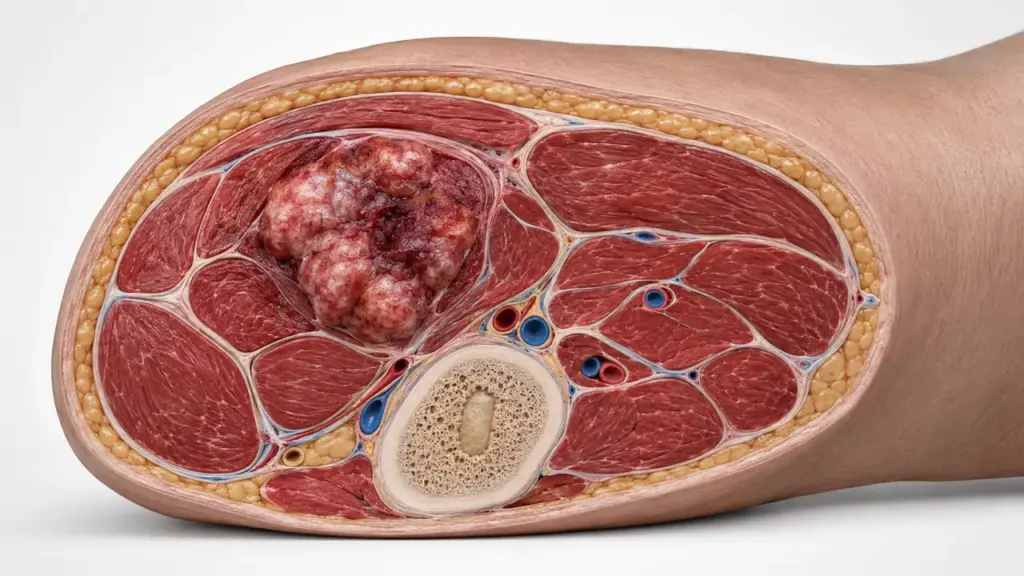
A soft tissue tumor is an abnormal mass of cells that develops in the body’s supportive and connective tissues. These tissues include muscles, fat, tendons, blood vessels, and nerves. Tumors can be benign or malignant (malignant); malignant tumors are called sarcomas.
Sarcomas are tumors of mesodermal origin (developing from structures such as muscle, fat, and connective tissue) and have more than 50 subtypes. Because they are rare and may present with symptoms similar to those of benign tumors, diagnosis can sometimes be delayed; this underscores the importance of early and accurate evaluation.
Can a Soft Tissue Tumor Be Benign?
Yes; the majority of masses that form in soft tissue are benign. Benign soft tissue tumors, such as lipomas (fat tissue tumors) , grow slowly, do not spread to surrounding tissues, and usually do not pose a serious threat. However, since benign and malignant masses can look similar, the distinction is always made through examination.
The following general characteristics may indicate that a mass requires closer evaluation; however, a definitive distinction can only be made through a biopsy.
Characteristic
Generally Benign
Requires Attention (Possibly Malignant)
Size
Smaller than 5 cm
Larger than 5 cm
Location
Close to the skin (superficial)
Within muscle (deep)
Growth
Stable or very slow
Progressively growing
Pain
Usually painless
May be painful
These criteria are not a “definitive diagnosis,” but rather guiding indicators. It is important to evaluate any mass that is progressively enlarging or has a deep location in order to detect a possible sarcoma early.
Malignant Soft Tissue Tumor
Malignant soft tissue tumors, also known as sarcomas, are cancers that can invade surrounding tissues and spread through the bloodstream (most commonly to the lungs). They may not cause symptoms in the early stages; because soft tissue is elastic, the tumor can grow without being noticed.
According to Prof. Dr. Hasan Göçer, a mass that is gradually growing and is deeply embedded within muscle, in particular, should not be taken lightly even if it does not cause pain; evaluating such masses through appropriate imaging and, when necessary, a biopsy is a step that directly affects treatment success.
Symptoms of Soft Tissue Tumors (Sarcomas)
Symptoms vary depending on the tumor’s location and size. In the early stages, the only symptom is often a painless mass. The main symptoms of benign soft tissue tumors and findings that may be observed in malignant cases are as follows:
Painless mass: The most common initial symptom is a slowly growing, painless swelling.
Enlarging swelling: A mass that increases in size over time requires evaluation.
Compression symptoms: As the tumor grows, it may press on nerves or muscles, causing pain or numbness.
Limited mobility: Masses near joints can restrict movement.
Skin changes: In advanced cases, the skin over the mass may appear taut or distorted.
The fact that a mass is painless does not make it “benign.” Since a significant proportion of sarcomas do not cause pain in the early stages, it is recommended that any persistent or growing mass be evaluated by a specialist.
What Causes Soft Tissue Tumors?
The exact cause of most soft tissue tumors is unknown. However, certain factors are thought to increase the risk:
Genetic predisposition: Certain inherited syndromes (such as neurofibromatosis) may increase the risk.
Previous radiation therapy: Radiation received for another cancer may pose a risk years later.
Certain chemical exposures: Long-term exposure to specific chemicals has been linked to the condition.
Unknown causes: In most cases, no identifiable cause is found.
The presence of these risk factors does not necessarily mean a tumor will develop; in most patients, no clear cause can be identified. Nevertheless, close monitoring for new masses is recommended in individuals at risk.
Clinical Assessment by Prof. Dr. Hasan Göçer
“In my clinical practice, the most common mistake I encounter with soft tissue masses is that they are ignored for a long time because they are painless. However, in the case of a sarcoma, early diagnosis directly determines the chances of limb-sparing surgery and treatment success; which is why I take every growing mass seriously.”
Prof. Dr. Hasan Göçer — Orthopedic and Traumatology Specialist
This observation has great practical significance. When sarcomas are detected early and while they are still small, the likelihood of both completely removing the tumor and preserving the limb increases significantly. For this reason, rather than a “wait-and-see” approach, timely evaluation of growing masses should be preferred.
How to Identify a Soft Tissue Tumor?
Determining whether a soft tissue mass is benign or malignant requires a multi-step evaluation. A physical examination alone is not sufficient.
Physical examination: The mass’s size, depth, consistency, and growth history are assessed.
MRI: This is the most valuable imaging modality for soft tissue masses; it shows the mass’s structure and its relationship to surrounding tissues.
CT (lungs): Used to screen for possible spread in cases of suspected malignancy.
Biopsy: This is the stage at which a definitive diagnosis is made; a tissue sample taken from the mass is examined pathologically.
The evaluation of any persistent or growing soft tissue mass via biopsy is the foundation of an accurate diagnosis. Performing the biopsy using the appropriate technique at an experienced center improves the accuracy of the subsequent treatment plan.
Soft Tissue Tumor (Sarcoma) Treatment
Treatment is tailored to the individual based on whether the mass is benign or malignant, as well as its size, location, and type. While surgery is often sufficient for benign masses, multiple methods may be used in combination for sarcomas.
Surgery
This is the cornerstone of treatment. Benign tumors are generally treated by surgical removal. In sarcomas, the goal is to remove the tumor along with a margin of healthy tissue while preserving the limb (limb-sparing surgery).
Radiation Therapy
In sarcomas, it may be administered before or after surgery to target remaining cells and reduce the risk of recurrence. In modern practice, radiation therapy is a key component that supports the success of limb-sparing surgery.
Chemotherapy
In some types of sarcomas, particularly in cases with a high risk of metastasis, chemotherapy may be added to the treatment regimen. Eligibility is determined based on the tumor type and stage.
Prof. Dr. Göçer emphasizes that in clinical practice, sarcoma treatment should not rely on a single method but rather be carried out through the coordinated planning of surgery, radiation therapy, and, when necessary, chemotherapy. Today, thanks to limb-sparing techniques, it is possible to preserve the limb in many patients.
Soft Tissue Tumor Surgery
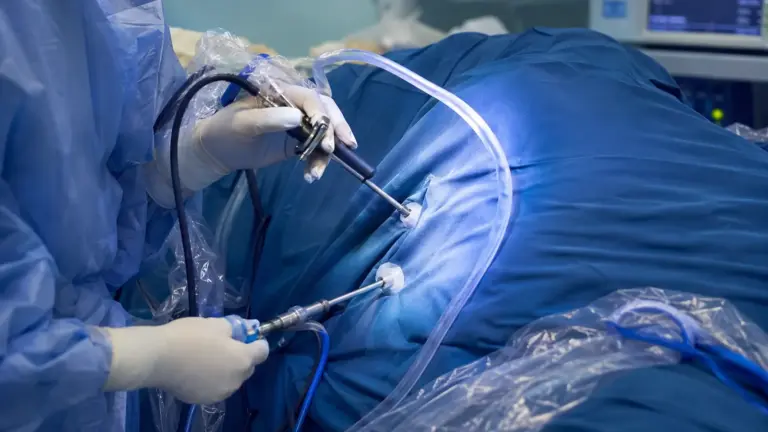
Soft tissue tumor surgery involves the removal of the mass. While the procedure for benign masses is generally limited to removing the mass itself, in sarcomas, the tumor is removed along with a margin of surrounding healthy tissue (wide resection). This reduces the risk of recurrence and aims to preserve the limb.
Postoperative recovery varies depending on the type and size of the mass and whether additional treatment (such as radiation therapy) is required. Physical therapy and regular follow-up visits are important for both regaining function and monitoring for recurrence.
From Diagnosis to Recovery: How Does the Process Proceed?
Stage
Time
What Happens?
Initial Examination
Day 1
The size, depth, and growth history of the mass are assessed
Imaging
Weeks 1–2
The mass’s structure and relationship to surrounding tissues are examined via MRI
Biopsy & Diagnosis
Weeks 2–3
The tissue sample is used to determine whether the mass is benign or malignant and to identify the specific type
Treatment
Depending on the type
Surgery and, if necessary, radiation therapy/chemotherapy are administered
Recovery & Follow-up
Varies
Physical therapy and regular checkups are performed to monitor for recurrence
Initial Examination and Imaging: The characteristics of the mass are evaluated; an MRI reveals the mass’s structure and its relationship with surrounding tissues.
Biopsy and Diagnosis: A tissue sample is used to definitively determine whether the mass is benign or malignant and to identify its type. This result forms the basis of the treatment plan.
Treatment and Follow-Up: Depending on the type, surgery and, if necessary, additional treatments are initiated. Physical therapy and regular checkups continue during the recovery period.
Frequently Asked Questions
How can you tell if a tumor is benign?
Although it is possible to estimate whether a mass is benign through physical examination and imaging, a definitive diagnosis can only be made through a biopsy. Generally, masses that are smaller than 5 cm, superficial, painless, and not growing are more likely to be benign; however, this is not always definitive.
Which doctor should you see for a soft tissue tumor?
For soft tissue masses, you can consult an orthopedic and trauma specialist or an orthopedic oncologist. If there is a possibility of malignancy, the evaluation is conducted at a center with experience in sarcomas and by a multidisciplinary team.
Are soft tissue tumors dangerous?
Most soft tissue masses are benign and pose no danger. However, malignant ones (sarcomas) should be taken seriously because they can spread to surrounding tissues and distant organs. Therefore, it is important to evaluate masses that are growing or persistent.
What is the recovery rate for soft tissue cancer?
The survival rate varies depending on the type, size, stage, and response to treatment of the tumor. Outcomes are better for small, early-stage tumors that have not spread. Therefore, early diagnosis is one of the most important factors determining the course of the disease. An individualized assessment is required.
Conclusion
Although soft tissue tumors are mostly benign, malignant ones (sarcomas) may not present symptoms in the early stages and therefore require careful evaluation. The most common finding is a painless, growing mass; masses that are increasing in size or are deeply seated should not be overlooked. Early diagnosis directly increases both the chances of limb preservation and treatment success.
You can begin the examination process to assess your personal situation regarding soft tissue tumors. Prof. Dr. Hasan Göçer evaluates each patient’s clinical presentation individually to determine the appropriate treatment options.
Orthopedic and Traumatology Specialist. He provides care with a patient-centered approach in the fields of orthopedic traumatology and arthroscopy, specializing primarily in surgery for bone and soft tissue tumors, knee and hip replacement surgery, and revision joint replacement surgery.