🦴 Quick Facts from Prof. Dr. Göçer
- Non-surgical treatment for osteoarthritis is the first-line approach for early- and mid-stage knee osteoarthritis.
- International guidelines recommend exercise and physical therapy as first-line treatments for osteoarthritis.
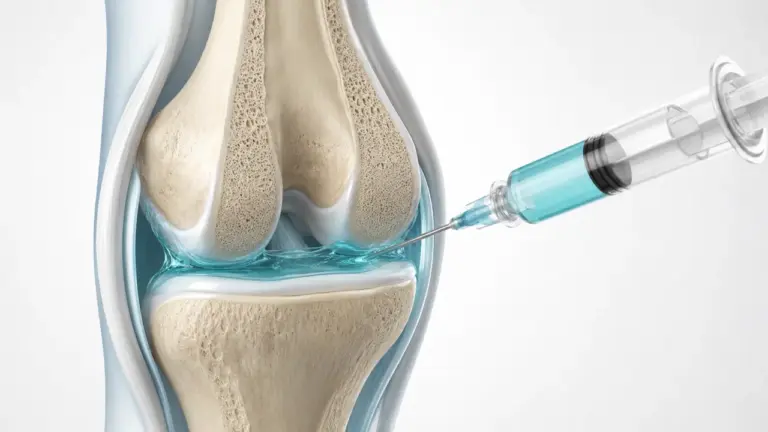
- Intra-articular injections of corticosteroids can provide relief for several weeks, while hyaluronic acid and PRP can provide relief for several months.
- Weight control is one of the most effective steps in alleviating pain by reducing the load on the knee.
In knee osteoarthritis, surgery is often the last resort, not the first option. Non-surgical treatment for osteoarthritisis a comprehensive approach aimed at reducing pain caused by cartilage wear, preserving mobility, and slowing the progression of the disease. In the early and middle stages, these methods can provide many patients with a comfortable life for many years.
What Is Non-Surgical Osteoarthritis Treatment?
Non-surgical (conservative) osteoarthritis treatment refers to all approaches aimed at managing the symptoms of knee osteoarthritis without surgery. These treatments do not restore cartilage; but by reducing pain, increasing muscle strength, and balancing joint load, they significantly alleviate the disease’s impact on daily life.
International guidelines recommend these methods as first-line treatment for early- and mid-stage osteoarthritis. Surgery is considered only when non-surgical options prove insufficient and quality of life is significantly impaired.
Non-Surgical Osteoarthritis Treatment Methods
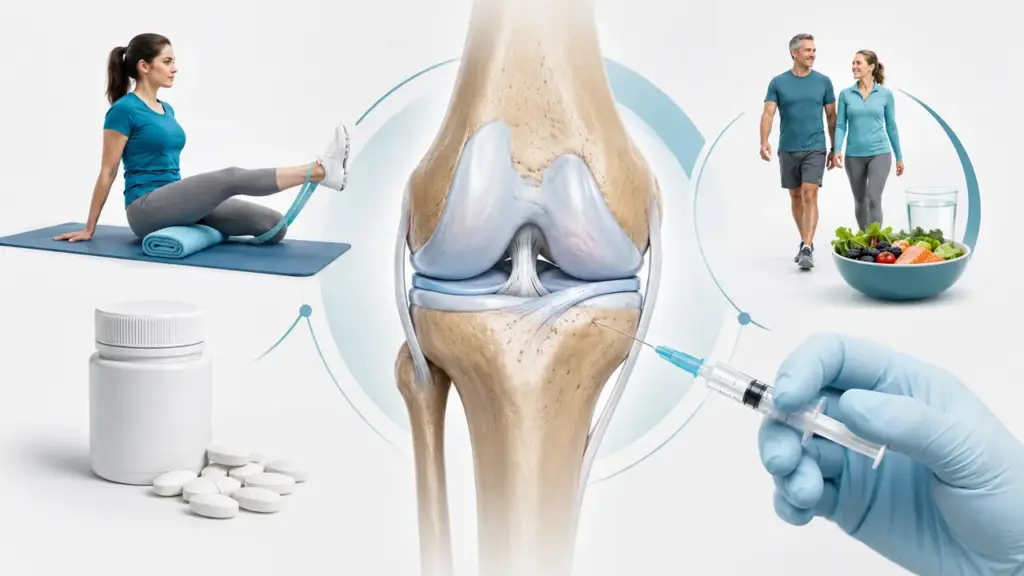
Non-surgical osteoarthritis treatment methods include non-pharmacological and pharmacological approaches, as well as intra-articular procedures. These are typically applied in combination and in a stepwise manner.
Exercise and Physical Therapy
Exercises that strengthen the muscles around the knee are the foundation of osteoarthritis treatment and are recommended as the first-line approach in guidelines. Strong muscles help balance the load on the knee, thereby reducing pain and maintaining mobility. Physical therapy ensures that these exercises are performed correctly and safely.
Weight Management
Excess weight increases the load on the knee, accelerating wear and tear. Losing weight is one of the most effective steps in reducing pain and also supports the success of other treatments. A balanced diet and appropriate physical activity are part of this process.
Medication
Nonsteroidal anti-inflammatory drugs (NSAIDs) and simple pain relievers can be used to control pain and swelling. These medications should be used as prescribed by a doctor and for appropriate durations; the potential side effects of long-term use should be taken into account.
Assistive Devices
Devices such as canes, knee braces, or appropriate insoles can help reduce pain by balancing the load on the joint. These can be particularly beneficial for patients with leg alignment issues.
Intra-articular Injection Treatments
In cases where pain cannot be adequately controlled with exercise and medication, intra-articular injections may be considered. The effectiveness and duration of these methods vary by type; suitability is determined by a physician’s evaluation.
| Injection | Duration of Effect | General Note |
|---|---|---|
| Corticosteroid | Several weeks | Short-term, powerful pain and inflammation control |
| Hyaluronic acid | Several months | Lubricates the joint; more effective in mild-to-moderate stages |
| PRP (platelet-rich plasma) | Several months | Evaluated in young patients with mild to moderate stages |
According to Prof. Dr. Hasan Göçer, intra-articular injections are not a “solution” on their own, but rather supportive methods that make sense when combined with exercise and weight control; the type and timing of the injection should be personalized based on the patient’s stage and symptoms.
Prof. Dr. Hasan Göçer’s Clinical Assessment
“In my clinical practice, I observe that the majority of patients with early- and mid-stage osteoarthritis can remain comfortable for many years without surgery, through an appropriate exercise program and weight management. The success of non-surgical treatment not on a single intervention, but on the consistent and combined application of these methods.”
Prof. Dr. Hasan Göçer — Orthopedic and Traumatology Specialist
The importance of this approach stems from the fact that non-surgical treatment is not a “wait-and-see period” but an active treatment process. When regular exercise, weight control, and injections (when necessary) are carried out together, the need for surgery can be postponed for years in many patients. However, these methods do not have the same effect at every stage; their effectiveness may be limited in advanced stages.
Who Is a Candidate for Non-Surgical Treatment?
Non-surgical methods are most effective, particularly in the early and middle stages of the disease. In general, they are the preferred choice in the following situations:
- Early–mid-stage osteoarthritis: Cases where cartilage wear has not yet progressed significantly.
- Patients who are not suitable for surgery: Individuals for whom surgery is risky due to other health issues.
- Those who wish to postpone surgery: Patients whose symptoms can be managed with non-surgical methods.
- Preoperative preparation: To increase muscle strength in patients scheduled for surgery.
In advanced-stage osteoarthritis (particularly Kellgren-Lawrence Stage 4), the effectiveness of non-surgical methods may be limited; surgical options are evaluated for these patients. The appropriate treatment is determined through physical examination and imaging.
From Evaluation to Follow-Up: How Does the Process Proceed?
| Stage | Time | What Happens? | |
|---|---|---|---|
| Initial Examination | Day 1 | The duration and stage of the pain are assessed; an X-ray is ordered | |
| Developing a Plan | Week 1 | Exercise, weight goals, and, if necessary, a medication plan are determined | |
| Implementation | Weeks | Physical therapy and lifestyle adjustments are continued | Exercise, weight loss goals, and, if necessary, a medication plan are determined |
| Implementation | Weeks | Physical therapy and lifestyle adjustments are continued | |
| Injection (if necessary) | Depending on response | If pain does not decrease sufficiently, an intra-articular injection is considered | |
| Follow-up | Regular | Response is monitored; treatment is updated as needed |
Initial Evaluation and Plan: The nature of the pain and the stage of the disease are assessed; a personalized plan is developed that includes exercise, weight management, and medication if necessary.
Implementation and Injections: Physical therapy and lifestyle modifications are continued; if pain does not decrease sufficiently, intra-articular injection options are evaluated.
Follow-up: The response to treatment is monitored regularly, and the plan is updated as needed.
Frequently Asked Questions
Can osteoarthritis be cured without surgery?
Osteoarthritis is not a condition that “goes away” completely; rather, it is a condition that is managed. In the early and moderate stages, symptoms can be significantly reduced through exercise, weight control, medication, and injections when necessary, and surgery can be postponed for years. In the advanced stage, however, the effectiveness of non-surgical methods may be limited.
What is the most effective non-surgical treatment for knee osteoarthritis?
Guidelines recommend exercises to strengthen the muscles around the knee and physical therapy as the first-line treatment. The effectiveness increases when combined with weight management. Injections serve as additional options to support these core methods. The most effective approach is to use these methods in combination.
Does PRP injection work for osteoarthritis?
PRP can reduce pain and improve function, particularly in younger patients with mild-to-moderate osteoarthritis; its effects typically last several months. Evidence varies depending on the patient group, so suitability should be determined by a physician’s evaluation.
How effective are osteoarthritis injections?
The effect varies depending on the type of injection. Corticosteroids can provide relief for a few weeks, while hyaluronic acid and PRP can provide relief for a few months. Injections are not a permanent treatment but rather supportive methods used in conjunction with exercise and weight control.
Conclusion
Non-surgical osteoarthritis treatment is the most effective way to reduce pain and preserve mobility in early- and mid-stage knee osteoarthritis. Exercise and physical therapy are the primary first-line treatments; weight management, medication, and, when necessary, intra-articular injections support this foundation. When these methods are used together and consistently, the need for surgery can be delayed for years in many patients.
You can begin the consultation process to assess your personal situation regarding non-surgical osteoarthritis treatment. Prof. Dr. Hasan Göçer evaluates each patient’s clinical presentation individually to determine the most appropriate treatment options.
References
- NCBI/PMC, “Nonoperative Management Recommendations for Knee Osteoarthritis: A Review of Clinical Guidelines,” 2025 — https://pmc.ncbi.nlm.nih.gov/articles/PMC12660514/
- Washington State HCA, “HA and PRP for Knee and Hip OA: Final Evidence Report,” 2023 — https://www.hca.wa.gov/assets/program/HA-PRP-final-evidence-report.pdf
- NCBI/PMC, “Role and Effectiveness of Intra-articular Injection of Hyaluronic Acid … A Systematic Review,” 2022 — https://www.ncbi.nlm.nih.gov/pmc/articles/PMC9135165/