👨⚕️ Prof. Dr. Hasan Göçer📅 21 July 2026🕑 9 minutes of reading
🦴 Quick Facts from Prof. Dr. Göçer
A biopsy is the only reliable method for determining whether a tumor is benign or malignant.
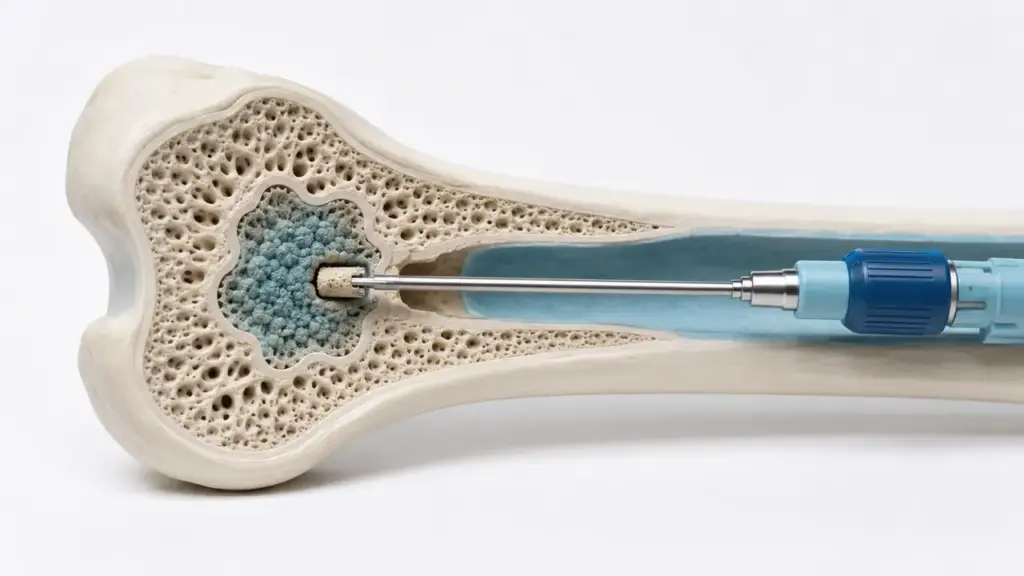
The main types are fine-needle aspiration, core-needle (tru-cut) biopsy, and surgical (open) biopsy.
In image-guided core needle biopsy, diagnostic accuracy can exceed 90%, and the complication rate is very low.
Biopsy results are usually available within 1–3 days; this timeframe may be longer for certain specialized tests.
Imaging methods can strongly suggest whether a mass is cancerous, but only a tissue examination provides a definitive answer. A biopsy is the procedure of taking a small tissue sample from a suspicious tumor and examining it under a microscope. This examination determines whether the tumor is benign or malignant and identifies its type, thereby forming the basis of the treatment plan.
What Is a Biopsy?
A biopsy is the process in which a tissue or cell sample taken from a suspicious area of the body is examined under a microscope by a pathologist. The goal is to definitively determine the nature of a mass (benign or malignant) and, if malignant, to definitively determine its type and grade.
In bone and soft tissue tumors, a biopsy is the most critical first step in determining the treatment strategy. A properly planned biopsy directly affects the success of subsequent surgery; a sample taken using the wrong technique or from the wrong location, however, can complicate treatment. For this reason, it is important that the biopsy be planned in coordination with the team that will treat the tumor.
Types of Biopsies
A biopsy can be performed using different methods depending on the amount of tissue to be collected and the location of the mass. The main types are as follows:
Method
How Is It Performed?
General Note
Fine-needle aspiration
A cell sample is obtained using a fine needle
Quick; however, provides limited tissue
Core needle (tru-cut)
A tissue cylinder is obtained using a needle with a cutting tip
Frequently used for bone and soft tissue tumors
Image-guided biopsy
The needle is guided using CT or ultrasound
For deep and non-palpable masses
Surgical (open) biopsy
A tissue sample is obtained through a small incision
Provides more tissue; used in selected cases
In bone and soft tissue tumors, image-guided core needle biopsy is increasingly preferred. This method is minimally invasive, has a low complication rate, and provides a diagnosis in most cases without the need for a surgical biopsy. The choice of method depends on the location and type of the mass.
How Is a Biopsy Performed?
Although the biopsy procedure varies depending on the method chosen, it generally follows similar steps. Needle biopsies are usually performed under local anesthesia and take a short time.
Preparation: The area is cleaned and numbed with local anesthesia.
Guidance: For deep masses, the needle is guided to the correct location using ultrasound or CT guidance.
Sample collection: An adequate tissue sample is obtained from the mass using a needle or cutting tip.
Closure: The area is closed after the procedure; sutures may be required for a surgical biopsy.
Pathological examination: The sample is sent to the laboratory and evaluated under a microscope.
According to Prof. Dr. Hasan Göçer, in bone and soft tissue tumors, where and how the biopsy is taken is just as important as the procedure itself; because an improperly placed biopsy scar can complicate future limb-sparing surgery. For this reason, the biopsy should be planned in collaboration with the team that will perform the treatment.
How Is a Biopsy Taken? (From Which Area)
The site from which the biopsy will be taken is carefully determined based on imaging findings. The goal is to obtain a sample from an area containing viable tissue that best represents the tumor. Samples taken from areas containing dead tissue (necrosis) may yield misleading results.
Especially in bone and soft tissue masses with a potential for malignancy, the biopsy site is planned along a line that can be excised later during surgery. This detail is important for preserving the chance of limb-sparing surgery and .
Clinical Assessment by Prof. Dr. Hasan Göçer
“In my clinical practice, I always emphasize that a biopsy is the most critical first step in tumor treatment. A sample taken using the correct technique and from the correct location not only increases the accuracy of the diagnosis but also paves the way for subsequent surgery. For this reason, I prefer to plan the biopsy in collaboration with the team that will treat the tumor.”
Prof. Dr. Hasan Göçer — Orthopedic and Traumatology Specialist
This approach has significant clinical importance. The literature reports that unplanned or improperly performed biopsies can complicate subsequent treatment and, in some cases, limit surgical options. Therefore, although a biopsy may seem like a simple procedure, it is one of the most critical stages of tumor management.
How Long Does It Take to Get Biopsy Results?
Biopsy results are typically available within 1–3 days. However, this timeframe may vary depending on factors such as the type of biopsy and the scope of the required examinations. In some cases, the results may take a few more days due to additional tests.
Standard pathological examination: Results are usually available within a few days.
Special stains and immunohistochemistry: May require additional time to clarify the tumor type.
Molecular/genetic tests: In some tumors, more detailed analysis may extend the timeframe.
The fact that results sometimes take longer than expected is due to additional examinations performed to ensure a more accurate diagnosis. These additional tests are valuable for ensuring the accuracy of the treatment plan.
From Procedure to Result: How Does the Process Proceed?
Stage
Time
What Happens?
Evaluation & Planning
Before the procedure
The biopsy method and entry point are determined based on imaging
Biopsy Procedure
On the day of the procedure
Under local anesthesia, a tissue sample is collected in a short time
Pathological Examination
1–3 days
The sample is examined under a microscope; additional tests are performed if necessary
Results & Planning
After Results
A treatment plan is developed based on the tumor type
Evaluation and Procedure: Based on imaging findings, the most appropriate biopsy method and entry point are selected; the procedure is typically performed under local anesthesia and takes a short time.
Examination and Results: The sample is evaluated in the pathology laboratory. Once the tumor type is confirmed, a treatment plan appropriate for that type is developed.
Frequently Asked Questions
How is a breast biopsy performed?
A breast biopsy is usually performed using the fine-needle or core-needle (tru-cut) method, usually under ultrasound guidance. The area is numbed with local anesthesia, and a tissue sample is taken from the suspicious area. The method is determined based on the characteristics of the lump. (Breast biopsies are performed by specialists in this field.)
Why does it take so long to get the biopsy results?
Standard results are typically available within 1–3 days. However, the process may take longer if special staining, immunohistochemistry, or molecular tests are required to clarify the type of tumor. These additional tests ensure a more accurate diagnosis.
How is a lung biopsy performed?
A lung biopsy is often performed using a needle under CT guidance or via bronchoscopy. The procedure aims to obtain a tissue sample from the suspicious area and is performed by a specialist in the relevant field. The method is selected based on the location and size of the mass.
How long does a biopsy take?
Needle biopsies are usually completed in a few minutes to half an hour. Procedures performed under imaging guidance may take a little longer. Surgical biopsies, on the other hand, take more time since they are performed in an operating room setting.
Does a biopsy hurt?
Since needle biopsies are performed under local anesthesia, you generally do not feel any pain during the procedure; you may only feel slight pressure. After the effects of the anesthesia wear off, there may be brief, mild tenderness in the area.
Is a biopsy risky?
Needle biopsies are low-risk procedures; the complication rate for image-guided core needle biopsies is quite low. Minor bleeding or bruising may rarely occur. When performed with the correct technique by an experienced practitioner, it is a safe procedure.
How long does a biopsy take?
A needle biopsy is typically completed in a few minutes to 20–30 minutes. Preparation and image guidance may extend this time slightly. A brief observation period after the procedure is sufficient.
Which department performs the biopsy?
Depending on the location of the mass, the biopsy is performed by different medical specialties. For bone and soft tissue tumors, the procedure is often planned by orthopedic oncology and interventional radiology. The specimen is then examined by a pathologist.
What is the difference between a biopsy and pathology?
A biopsy is the procedure for obtaining a tissue sample; pathology is the process of diagnosing the condition by examining that sample under a microscope. In other words, a biopsy collects the sample, while pathology evaluates that sample to determine the type of tumor. The two complement each other.
Conclusion
A biopsy is the most reliable method for determining whether a tumor is benign or malignant, and it constitutes the most critical first step in tumor treatment. Various methods, ranging from fine-needle aspiration to surgical biopsy, are selected based on the location and type of the mass. A sample taken using the correct technique and from the correct location both improves the accuracy of the diagnosis and paves the way for subsequent treatment. For this reason, it is of great importance that the biopsy be planned in collaboration with the team that will treat the tumor.
You can begin the examination process to assess your personal situation regarding a mass or the biopsy procedure. Prof. Dr. Hasan Göçer evaluates each patient’s clinical presentation individually to determine the appropriate treatment options.
Orthopedic and Traumatology Specialist. He provides care with a patient-centered approach in the fields of orthopedic traumatology and arthroscopy, specializing primarily in surgery for bone and soft tissue tumors, knee and hip replacement surgery, and revision joint replacement surgery.