👨⚕️ Prof. Dr. Hasan Göçer📅 21 July 2026🕑 8 minutes of reading
🦴 Quick Facts from Prof. Dr. Göçer
Anterior cruciate ligament (ACL) surgery is based on reconstructing the torn ligament using a graft (tendon tissue) rather than simply suturing it.
The procedure is typically performed arthroscopically (minimally invasive) through small incisions.
While a return to daily life usually occurs within 3–4 months, a return to sports may take 6–12 months, depending on the type of tear.
The most critical factor in recovery is regular and gradual physical therapy following surgery.
A “pop” sound heard during a sudden twisting of the knee, followed by a feeling of giving way, is often a sign of an anterior cruciate ligament (ACL) injury. Anterior cruciate ligament (ACL) surgery is a surgical procedure in which this ligament—which maintains the knee’s anterior-posterior balance—is reconstructed using a graft when it tears. The goal is to restore the knee’s stability and function.
What Is Anterior Cruciate Ligament Surgery?
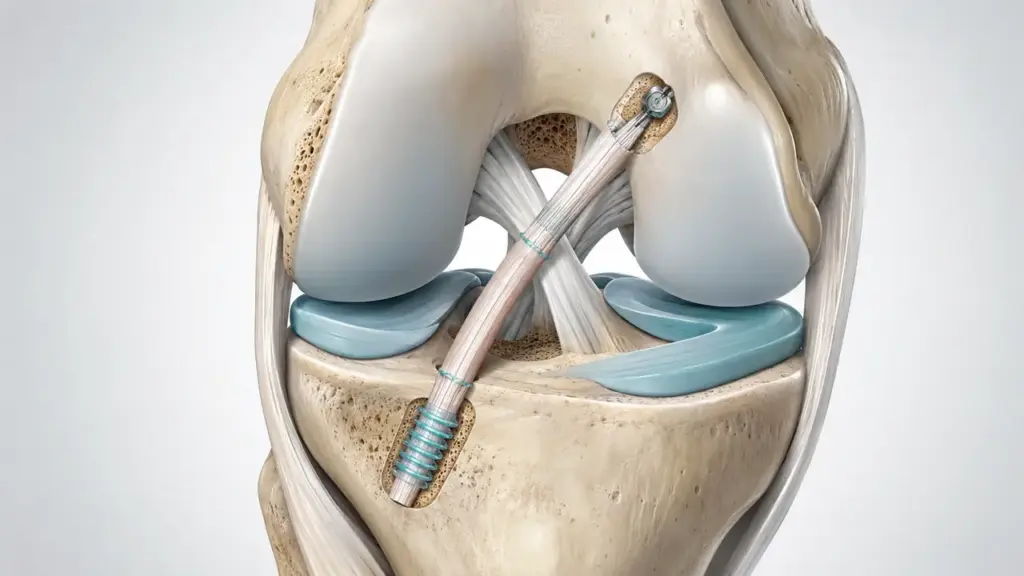
The anterior cruciate ligament (ACL) is a crucial ligament located in the center of the knee joint that prevents the tibia from shifting excessively forward. When it is completely torn, the ends typically do not heal simply by being sutured together. Therefore, during surgery, the ligament is reconstructed using tendon tissue called a “graft.”
The graft used can be taken from the patient’s own body (autograft; for example, a knee or hamstring tendon) or from a tissue bank (allograft). The graft is threaded through small tunnels created in the femur and tibia, secured with appropriate tension, and over time functions like the patient’s own ligament tissue.
Who Needs Anterior Cruciate Ligament Surgery?
Not every anterior cruciate ligament injury requires surgery. The decision to operate is made by evaluating the patient’s age, activity level, knee instability, and any accompanying injuries together. Generally, surgery is considered in the following situations:
Active and athletic patients: Those who wish to return to sports involving twisting and jumping.
Knee instability: A feeling of the knee giving way or instability even during daily activities.
Concomitant injuries: Cases where the meniscus or other ligaments are also damaged.
Lack of response to conservative treatment: Failure of the knee to stabilize despite physical therapy.
According to Prof. Dr. Hasan Göçer, the decision to undergo anterior cruciate ligament (ACL) surgery should be evaluated in conjunction with the patient’s daily life and activity expectations; while some patients with low activity levels can be managed without surgery through a good physical therapy program, reconstruction is prioritized in active and athletic patients to preserve the long-term health of the knee.
How Is Anterior Cruciate Ligament Surgery Performed?
Anterior cruciate ligament surgery is typically performed using an arthroscopic (minimally invasive) technique. In this method, the procedure is carried out using a camera and fine instruments inserted through small incisions made in the knee. The general steps are as follows:
Anesthesia: The appropriate anesthesia method is administered to the patient.
Graft preparation: An autograft or allograft is prepared to the appropriate size.
Tunnel creation: Tunnels are created in the femur and tibia for the graft to pass through.
Graft placement: The graft is passed through the tunnels and secured with appropriate tension.
Check and closure: Knee stability is checked, and the incisions are closed.
If there are concomitant injuries, such as a meniscus tear, during the surgery, they can be repaired during the same session. The advantage of the arthroscopic method is that it involves smaller incisions and generally results in faster early recovery.
Clinical Assessment by Prof. Dr. Hasan Göçer
“In my clinical practice, I emphasize that the biggest misconception is thinking that the success of an ACL surgery ends in the operating room. It takes time for the graft to transform into strong connective tissue; rushing back to sports during this process increases the risk of re-injury. That is why I place great importance on a gradual, criteria-based physical therapy regimen.”
Prof. Dr. Hasan Göçer — Orthopedic and Traumatology Specialist
The importance of this approach stems from the graft’s maturation through a process called “ligamentization.” Over the course of several months, the graft gradually gains the same strength as the body’s own connective tissue. For this reason, the return to sports is determined not only by the elapsed time but also by the results of muscle strength and functional tests.
Anterior Cruciate Ligament (ACL) Surgery Recovery Process
Recovery after anterior cruciate ligament surgery proceeds through a phased, criteria-based physical therapy program. The process typically takes anywhere from a few months to a year, and each phase is completed only after specific goals have been met.
Early phase (first weeks): Reducing pain and swelling; regaining knee range of motion and thigh muscle strength.
Intermediate phase (weeks–months): Exercises to increase muscle strength and balance; return to daily activities.
Advanced phase (3–6 months): Gradual transition to running, agility, and sport-specific movements.
Return to sports: Typically between 6 and 12 months, once functional tests are successfully passed.
Return to daily life occurs within 3–4 months for most patients. Return to sports involving turning and jumping, however, may take longer to allow the graft to mature and reduce the risk of re-injury. Psychological preparation and regaining self-confidence are also important during this process.
From Surgery to Return to Sports: How Does the Process Proceed?
Stage
Time
What Happens?
Pre-Surgery
Post-Injury
Swelling is reduced; mobility and muscle strength are prepared
Surgery
Day of the procedure
Graft is placed using an arthroscopic technique
Early Recovery
First few weeks
Movement and muscle strength are regained through physical therapy
Functional Phase
3–6 months
Gradual transition to running and sport-specific movements
Return to Sports
6–12 months
Return to sports is permitted under supervision once functional tests are passed
Preoperative and Surgical Phase: The knee is “stabilized,” and range of motion and muscle strength are prepared; then, a graft is implanted using arthroscopic techniques.
Recovery and Functional Phase: Range of motion and strength are regained through physical therapy; running and sport-specific movements are resumed within 3–6 months.
Return to Sports: Once functional tests are successfully passed, a controlled return to sports typically occurs between 6–12 months.
Frequently Asked Questions
How long does anterior cruciate ligament surgery take?
Arthroscopic anterior cruciate ligament surgeries are typically completed within a few hours. The duration may vary depending on the type of graft, the presence of accompanying injuries such as meniscus tears, and the surgical plan. The exact duration is determined during the preoperative evaluation.
When can you walk after anterior cruciate ligament surgery?
Assisted walking usually begins in the days following surgery, as recommended by a physical therapist. The use of crutches and the timing of weight-bearing vary depending on the patient and the surgical plan. The transition to independent walking occurs gradually as mobility and muscle strength are regained.
When are the stitches removed after anterior cruciate ligament surgery?
Stitches are typically removed approximately 10–14 days after surgery; however, this timeframe may vary depending on the type of suture used and wound healing. The exact timing is determined by the physician during a follow-up examination. While non-absorbable sutures need to be removed, some sutures dissolve on their own.
Is anterior cruciate ligament (ACL) surgery difficult?
Anterior cruciate ligament (ACL) surgery is a common procedure that is mostly performed arthroscopically. The most challenging part is not the surgery itself, but the recovery process, which requires patience and consistency. Adherence to a gradual physical therapy regimen is the most important factor determining the success of the outcome.
How can you tell if the anterior cruciate ligament has torn again after surgery?
Re-injury of the graft typically presents as a sudden feeling of the knee giving way, swelling, and instability; sometimes a “pop” sound similar to the initial injury may be heard. If these symptoms occur, you should see a doctor immediately. A definitive diagnosis is made through physical examination and an MRI.
Conclusion
Anterior cruciate ligament (ACL) surgery is a procedure—typically performed arthroscopically—in which the torn ligament is reconstructed using a graft. It aims to restore knee stability, particularly enabling active and athletic patients to return to daily life and sports. The key to success lies not only in the surgery itself but also in gradual, criteria-based physical therapy following the procedure. Return to daily life typically takes a few months, while a return to sports may take 6–12 months.
You can begin the consultation process to have your personal situation evaluated regarding anterior cruciate ligament (ACL) surgery. Prof. Dr. Hasan Göçer evaluates each patient’s clinical presentation individually to determine the most appropriate treatment options.
Orthopedic and Traumatology Specialist. He provides care with a patient-centered approach in the fields of orthopedic traumatology and arthroscopy, specializing primarily in surgery for bone and soft tissue tumors, knee and hip replacement surgery, and revision joint replacement surgery.