? Quick Facts from Prof. Dr. Göçer
- Hip arthroplasty is a surgical procedure in which the worn surfaces of the hip joint are replaced with artificial components; it is one of the most common and successful procedures in orthopedics.
- An 8-year implant survival rate of 99% has been reported in patients under 65 years of age (AAOS / AJRR registry data, 2023).
- According to combined international registry data, the 15-year survival rate of the prosthesis is approximately 89%, and the 25-year survival rate averages 58% (Lancet, 2019).
- Thanks to early mobilization, most patients are helped to stand with the assistance of a physical therapist on the first day after surgery.
When the cartilage of the hip joint is irreversibly worn away, the most effective way to permanently resolve pain and limited mobility is to replace the joint with an artificial one. Hip arthroplasty — commonly known as total hip replacement — is a surgical procedure performed for this purpose to restore function.
What Is Hip Arthroplasty (Total Hip Replacement)?
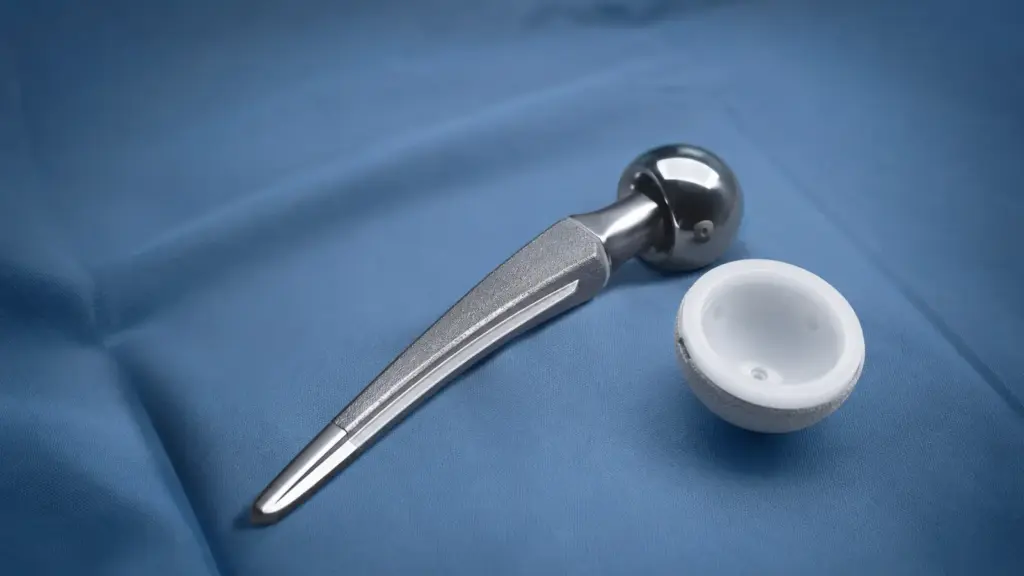
Hip arthroplasty is a surgical procedure in which the damaged hip joint surfaces (the head of the femur and the acetabulum in the pelvis) are replaced with an artificial joint composed of metal, ceramic, and special plastic components. The goal is to to eliminate the source of pain and provide a pain-free, mobile joint.
In the term “total hip replacement”, “total” indicates that both the socket and the head of the joint are replaced. The terms “total hip arthroplasty” and “total hip replacement” describe the same procedure. The most common reason for the surgery is advanced hip osteoarthritis; however, avascular necrosis of the femoral head, rheumatoid arthritis, and certain hip fractures may also be indications. Professional resources such as Total Hip Arthroplasty list this procedure among standard practices.
Total Hip Replacement Surgery
Total hip replacement surgery is typically performed under general or spinal anesthesia. The surgeon removes the worn joint surfaces and replaces them with artificial components. The goal after the procedure is for the patient to be able to move safely and as soon as possible.
- Anesthesia is administered, and the surgical site is prepared.
- The hip joint is accessed, and the worn-out femoral head is removed.
- An artificial acetabular cup is placed in the socket of the pelvic bone.
- The prosthesis stem and artificial joint head are inserted into the femoral canal.
- Joint stability is checked, and the tissue layers are closed.
According to Prof. Dr. Hasan Göçer, one of the most important factors determining the success of the surgery is the proper placement of the prosthetic components at the correct angle and position; proper placement both reduces the risk of dislocation and extends the life of the prosthesis.
Total Hip Replacement Complications
Although complication rates are low in modern surgery, as with any surgical procedure, total hip replacement complications are possible. A significant portion of these can be managed with early diagnosis and appropriate care. In a registry study involving patients under 65 years of age, the revision rate was reported as 1.0%, and the readmission rate within 90 days was 1.4% (AJRR / AAOS, 2023).
- Infection (periprosthetic infection)
- Prosthesis dislocation (particularly due to positioning errors in the first few weeks)
- Periprosthetic fracture
- Aseptic loosening (separation of components from the bone over time)
- Vascular or nerve injury or deep vein thrombosis (rare)
In the same registry study, the most common causes of revision were listed as infection, instability (dislocation), periprosthetic fracture, and aseptic loosening. Therefore, if signs of postoperative infection (increasing pain, redness, fever) appear, you should consult your doctor without delay.
Precautions to Follow After Total Hip Replacement
To prevent the prosthesis from dislocating and to maintain its durability during the healing process, certain guidelines must be followed. Precautions to Follow After Total Hip Replacement are particularly important during the first few weeks.
- Do not bend the hip more than 90 degrees during the first few weeks (avoid low chairs and toilets)
- Do not cross your legs or turn them inward
- Attend physical therapy sessions regularly
- Consult a doctor if you experience signs of infection (fever, increased pain, discharge)
- Inform your dentist about the presence of the prosthesis during procedures such as dental treatment
Prof. Dr. Göçer emphasizes that in his clinical practice, the risk of dislocation is significantly reduced in patients who adhere to positioning guidelines during the first 6–8 weeks after surgery. Patiently managing this period with physical therapy support directly impacts long-term outcomes.
Clinical Assessment by Prof. Dr. Hasan Göçer
“In my clinical practice, when deciding on a total hip replacement, I focus more on the patient’s quality of life and expectations than on their age. The choice of implant for a young, active patient may differ from that for a 70-year-old patient with limited mobility. A properly planned hip replacement is a procedure that enables the patient to walk pain-free and return to their daily life, demonstrating high long-term success.”
Prof. Dr. Hasan Göçer — Orthopedic and Traumatology Specialist
The practical importance of this assessment is that is that hip replacement surgery is not a “one-size-fits-all” procedure. The patient’s age, activity level, and bone structure determine both the surgical technique and the implant to be used. This individualized planning is critical for the longevity of the prosthesis and the patient’s satisfaction.
From Diagnosis to Recovery: How Does the Process Proceed?
| Stage | Time | What Happens? |
|---|---|---|
| Initial Examination | Day 1 | Physical examination, pain and gait assessment; hip X-ray ordered |
| Evaluation & Planning | Weeks 1–2 | Prosthesis planning based on X-ray measurements; anesthesia and general health assessment |
| Surgery | Scheduled day | Total hip replacement under general or spinal anesthesia; the procedure typically takes 1–2 hours |
| Hospital Stay | Days 2–4 | Getting out of bed on the first day, pain management, gait training, and discharge |
| Recovery | Weeks 6–12 | Gradual weight-bearing, physical therapy, lifting of restrictions, and follow-up visits |
Initial Examination and Planning: The size and position of the prosthesis are planned in advance using preoperative X-ray measurements. The patient’s general health and suitability for anesthesia are assessed.
Surgery and Hospital Stay: Thanks to the early mobilization protocol, most patients are helped to their feet on the first day with the assistance of a physical therapist. The length of the hospital stay varies depending on the individual’s condition.
Recovery: Walking returns to normal with gradual weight-bearing and regular physical therapy. Follow-up visits are necessary to monitor the prosthesis’s fit.
Frequently Asked Questions
What is hip arthroplasty?
Hip arthroplasty is the medical term for the surgical procedure in which the damaged surfaces of the hip joint are replaced with artificial components. “Arthroplasty” means joint repair or reconstruction. It is commonly known as total hip replacement and is most frequently performed in cases of advanced hip osteoarthritis.
How long does recovery take after hip arthroscopy?
Hip arthroscopy is a minimally invasive (camera-assisted) procedure, unlike prosthetic surgery; while the recovery time varies depending on the specific procedure performed, it is generally shorter than that of prosthetic surgery. However, this depends on the individual and the specific procedure performed. Your doctor’s assessment is essential for determining an exact timeframe. (Further details on this question are covered in the hip arthroscopy section.)
How long does a total hip replacement last?
Modern prostheses are highly durable. According to pooled data, implant survival rates are approximately 89% at 15 years and an average of 58% at 25 years (Lancet, 2019). This means that for the majority of patients, the prosthesis functions without issues for many years. Durability varies depending on age, activity level, weight, and the type of implant.
What percentage of patients with a total hip replacement is considered disabled?
The disability rating is determined by an authorized medical board based on criteria such as whether the prosthesis is unilateral or bilateral, joint range of motion, and the individual’s overall functional status. This rating is specific to each individual, and no standard, single value can be provided. For definitive information, you must consult a healthcare facility that issues disability assessment reports.
How long does total hip replacement surgery take?
Total hip replacement surgery is typically completed within 1–2 hours. The duration may vary depending on the patient’s bone structure, whether they have undergone previous surgery, and the technique used. Proper planning and meticulous surgical technique are just as important as the duration of the surgery in determining the outcome.
Conclusion
In this article, we discussed what hip arthroplasty (total hip replacement) is, how the surgery is performed, its potential complications, and what to watch for after surgery. A hip replacement that is properly planned and performed on a suitable patient is a procedure that demonstrates high long-term success and restores function.
You can begin the consultation process to have your personal situation evaluated regarding hip arthroplasty. Prof. Dr. Hasan Göçer evaluates each patient’s clinical presentation individually to determine the most appropriate treatment options.
References
- Evans JT et al. How long does a hip replacement last? A systematic review and meta-analysis. The Lancet, 2019 — https://www.thelancet.com/journals/lancet/article/PIIS0140-6736(18)31859-2/fulltext
- Cieremans DA et al. Implant survivorship and revision/readmission rates in THA patients under 65 (AJRR data). AAOS Annual Meeting, 2023 — https://www.aaos.org/
- Aboulenain S, Brent LH, Saber AY. Primary Osteoarthritis. StatPearls, NIH/NCBI Bookshelf, 2026 — https://www.ncbi.nlm.nih.gov/books/NBK557808/