? Quick Facts from Prof. Dr. Göçer
- Hip impingement syndrome results from abnormal contact between the femoral head and the acetabulum.
- It is most commonly seen in active individuals between the ages of 20 and 40.
- In the majority of cases, the initial treatment approach is a 6- to 12-week physical therapy program.
- If left untreated, impingement can lead to labral tears and early cartilage damage over time.
Pain in the hip region that worsens with movement and radiates to the groin and the front of the thigh is most often caused by abnormal bony contact between the femoral head and the rim of the acetabulum. Hip impingement syndrome is an orthopedic condition, particularly common in active young adults, that restricts joint range of motion and can lead to progressive damage over time.
What Is Hip Impingement Syndrome?
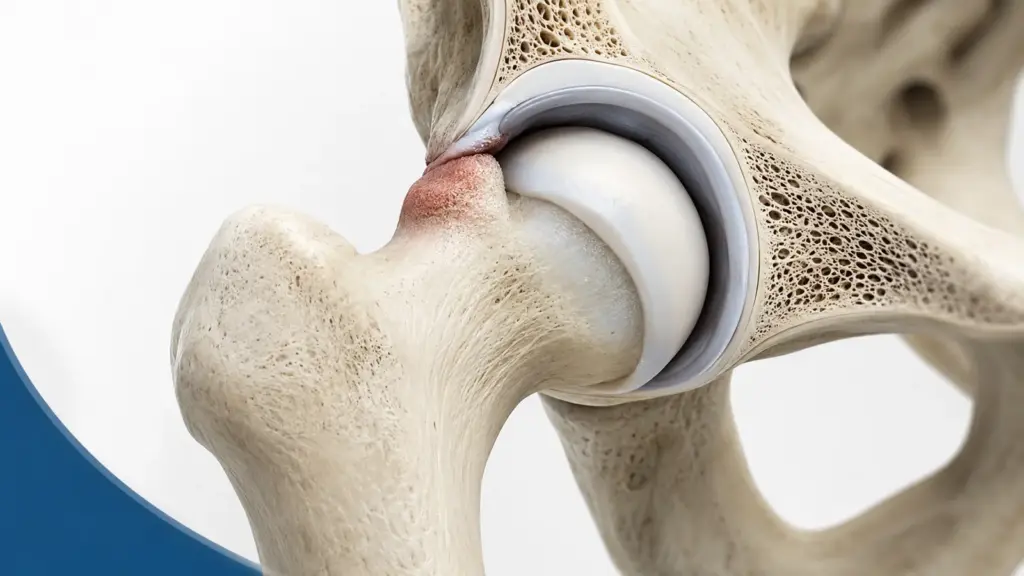
Hip impingement syndrome (femoroacetabular impingement/FAI) is a condition caused by an abnormal shape of the femoral head or the acetabular rim, in which the two structures come into contact during movement, leading to irritation of the intra-articular structures. This repeated contact can, over time, lead to tears in the labrum (joint lip) and wear on the cartilage surface.
What Causes Hip Impingement Syndrome?
The syndrome can result from three different types of bony abnormalities: excessive bone formation on the femoral neck (cam type), excessive coverage of the femoral head by the acetabulum (pincer type), or a combination of both (combined type). These structural features may be present from birth or may become apparent over time due to intense athletic activity.
- Cam type: excess bony protrusion at the femoral neck
- Pincer type: excessive development of the acetabular rim
- Combined type: the presence of both mechanisms
- Sports requiring repeated deep hip flexion (soccer, hockey, dance)
According to Prof. Dr. Hasan Göçer, it should be kept in mind that recurrent groin pain in young athletes may be caused by hip impingement syndrome and should be evaluated with imaging in the early stages.
Symptoms of Hip Impingement Syndrome
Symptoms usually begin gradually and worsen with activity. The most common symptoms include deep, dull pain in the groin area; increased discomfort after prolonged sitting; pain that becomes more acute during hip internal rotation or deep flexion; and, in some patients, a sensation of clicking or locking.
Treatment for Hip Impingement Syndrome
Treatment for hip impingement syndrome is planned in stages based on the severity of the patient’s symptoms and the degree of intra-articular damage. In the initial phase, activity modification, pain relievers, and a targeted physical therapy program for hip impingement syndrome are implemented. Physical therapy aims to reduce the load on the joint by improving muscle balance around the hip.
- Activity modification and rest
- Targeted physical therapy and muscle strengthening program
- Intra-articular injections when necessary
- Surgical evaluation if conservative treatment is ineffective
Hip Impingement Syndrome Surgery
Hip impingement syndrome surgery is considered when conservative treatment is ineffective or when significant labrum/cartilage damage is detected on imaging. Today, the procedure is largely performed arthroscopically to remove excess bone tissue and, if necessary, repair the labrum. The decision to operate is made after evaluating the patient’s age, activity level, and the extent of joint damage.
Clinical Assessment by Prof. Dr. Hasan Göçer
“In my clinical practice, I have observed that in a significant proportion of patients diagnosed with hip impingement syndrome, trying a structured physical therapy program first can delay the need for surgery or eliminate it entirely. However, if intra-articular damage has progressed, it is important not to delay surgical evaluation.”
Prof. Dr. Hasan Göçer — Orthopedic and Traumatology Specialist
This clinical observation highlights the importance of individualizing the treatment plan. Prof. Dr. Göçer emphasizes that, in his clinical practice, the combined evaluation of the patient’s duration of symptoms and imaging findings helps prevent unnecessary surgical interventions.
From Diagnosis to Recovery: How Does the Process Proceed?
| Stage | Time | What Happens? |
|---|---|---|
| Initial Examination | Day 1 | Physical examination, pain pattern assessment, X-ray/MRI ordered |
| Evaluation & Planning | Weeks 1–2 | Determination of the type of spondylolisthesis (cam or pincer), and development of a conservative or surgical treatment plan |
| Conservative Treatment | Weeks 6–12 | Physical therapy program and activity management are implemented |
| Surgery (if necessary) | Scheduled Date | Arthroscopic correction and labrum repair are performed |
| Recovery | Weeks 6–12 | Gradual return to activity with physical therapy; follow-up examinations |
During the initial examination, the specific movements that exacerbate the pain and the duration of the pain are thoroughly assessed. Imaging studies during the diagnostic phase reveal the type of impingement and any associated damage. During the conservative treatment phase, the patient’s compliance with physical therapy has a direct impact on the outcome. If surgery is necessary, the joint structure is corrected using arthroscopic techniques. During the recovery process, a plan for gradual increase in load and return to sports is carried out in collaboration with the physical therapist.
Frequently Asked Questions
How is hip impingement syndrome treated?
In mild to moderate cases, symptoms can be significantly reduced through activity modification and a physical therapy program. In cases with severe joint damage, however, surgical correction may be necessary.
What are the symptoms of hip nerve entrapment?
Unlike mechanical bone impingement, nerve compression in the hip region may present with numbness, tingling, and radiating pain. These findings constitute a distinct clinical picture that must be differentiated from mechanical impingement syndrome and are clarified during the physical examination.
What helps with hip muscle compression?
A program supervised by a physical therapist—including activity modification, targeted stretching, and strengthening exercises—can help reduce symptoms. Attempting intense exercises on your own is not recommended, as it may worsen symptoms.
When does a pinched nerve in the hip go away?
The duration varies depending on the cause and severity of the compression; while improvement may be seen within weeks in mild cases, the process may take longer if there is an underlying structural cause and requires a separate evaluation.
What happens if hip impingement is left untreated?
If left untreated, hip impingement syndrome can eventually lead to a labral tear, cartilage wear, and early-onset hip osteoarthritis in later years.
Which medical specialty treats hip nerve entrapment?
The evaluation and treatment of mechanical hip impingement syndrome are performed by orthopedic and trauma specialists; if neurological findings are suspected, a joint evaluation with a neurologist may be conducted.
What could hip pain indicate?
Hip pain can result from various causes, such as impingement syndrome, a labral tear, osteoarthritis, or muscle-related tension. The duration of the pain, its relationship to movement, and accompanying symptoms are important for differential diagnosis.
Does walking help with hip pain?
Light-paced walking can be beneficial for overall joint mobility, but movements that increase pain should be avoided. The appropriate level of activity should be determined based on the recommendation of a doctor or physical therapist following an examination.
Conclusion
Hip impingement syndrome is a condition in which long-term joint damage can be prevented with early diagnosis and proper management. The treatment plan is developed step-by-step based on the patient’s symptoms, ranging from conservative approaches to surgery. To assess your personal situation regarding hip impingement syndrome, you can begin the examination process. Prof. Dr. Hasan Göçer evaluates each patient’s clinical presentation individually to determine the most appropriate treatment options.
Sources
- American Academy of Orthopaedic Surgeons (AAOS) — OrthoInfo, “Femoroacetabular Impingement” — https://orthoinfo.aaos.org/en/diseases–conditions/femoroacetabular-impingement/
- National Institutes of Health (NIH) — StatPearls, “Femoroacetabular Impingement” — https://www.ncbi.nlm.nih.gov/books/NBK513236/
- Cleveland Clinic — “Hip Impingement (Femoroacetabular Impingement)” — https://my.clevelandclinic.org/health/diseases/17763-hip-impingement-femoroacetabular-impingement