🦴 Quick Facts from Prof. Dr. Göçer
- The vast majority of spinal tumors are metastatic tumors resulting from the spread of cancer from another organ to the spine; primary tumors originating in the spine are rare.
- The most common initial symptom is back or lower back pain; pain is the first symptom to appear in approximately 12–16% of patients.
- The cancers that most commonly metastasize to the spine are breast, lung, prostate, kidney, and colon cancers.
- Metastatic spinal involvement is most commonly seen in the back (thoracic) region.
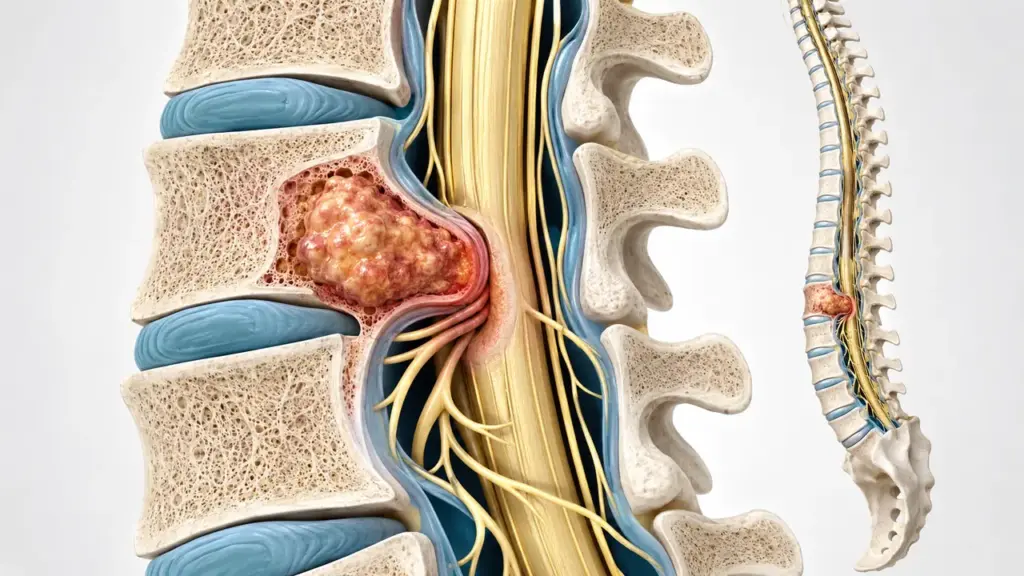
Persistent back pain, although often attributed to strain, can sometimes be a sign of a more serious problem. A spinal tumor, is a mass that forms in the spinal bones, the spinal cord, or the surrounding tissues; it can be benign or malignant. Since the spine is both a weight-bearing structure and a protector of the spinal cord, tumors in this area can cause both pain and neurological symptoms.
What Is a Spinal Tumor?
A spinal tumor is an abnormal mass of cells that develops in the bones forming the spine (vertebrae), the spinal meninges, or within the spinal cord. While these masses may originate in the spine (primary), they more commonly result from the spread of cancer from another organ to the spine (metastatic).
The risk of developing primary tumors originating in the spine is quite low, and the exact cause of most of them is unknown. In contrast, metastatic spinal tumors are a common occurrence in advanced-stage cancers. The type of tumor directly determines the course of treatment.
What Causes Spinal Tumors?
The cause of spinal tumors varies depending on whether the tumor is primary or metastatic. In metastatic cases, the cause is cancer in the primary organ. In primary tumors, however, the causes are largely unknown.
- Metastasis: Breast, lung, prostate, kidney, and colon cancers are the most common cancers that spread to the spine.
- Genetic factors: Certain hereditary syndromes may increase the risk of a primary spinal tumor.
- Previous radiation therapy: Radiation therapy received during childhood may pose a risk years later.
- Unknown causes: No identifiable cause is found in most primary tumors.
According to Prof. Dr. Hasan Göçer, in a patient with a known history of cancer, new-onset and progressively worsening back pain should be evaluated for spinal metastasis until proven otherwise; this approach allows for the early prevention of serious complications such as nerve compression.
Symptoms of Spinal Tumors
Symptoms vary depending on the tumor’s location, size, and whether it is compressing the spinal cord. The most common initial symptom is pain; however, the condition becomes more serious when nerve compression develops. The main symptoms of a spinal tumor are as follows:
- Back/lower back pain: Pain that worsens over time, does not subside with rest, and may become more pronounced at night is the most common symptom.
- Weakness in the arms or legs: Loss of strength may develop due to nerve compression.
- Numbness and tingling: Sensory changes occur depending on the affected nerve area.
- Walking and balance problems: Severe compression can affect the spinal cord, making movement difficult.
- Impaired bladder/bowel control: This is a symptom that may occur in cases of severe compression and requires urgent evaluation.
Sudden weakness, particularly in the arms or legs, along with-bowel control are warning signs that should not be delayed. These symptoms may indicate spinal cord compression, and early intervention is crucial in preventing permanent damage.
How Is a Spinal Tumor Diagnosed?
Imaging methods are crucial for diagnosing a spinal tumor. The goal is to determine the tumor’s location, its effect on the spinal cord, and its type.
- Neurological examination: Strength, sensation, and reflexes are assessed.
- MRI: It is the gold standard for imaging spinal tumors; it provides detailed visualization of the tumor and its relationship to the nerves.
- CT: It assesses changes in bone structure and the risk of fracture.
- Bone scan / PET: Screens for other sites of involvement in the body in cases of metastasis.
- Biopsy: A tissue sample is taken to confirm the tumor type.
MRI is the most valuable method for evaluating spinal tumors; as it clearly reveals both the tumor and its impact on the spinal cord and nerve roots. An accurate diagnosis directly determines the effectiveness of the treatment plan.
Risks of Spinal Tumors
The primary risk associated with spinal tumors stems from the tumor compressing the spinal cord and nerve roots. The main risks that may arise if left untreated are as follows:
| Risk | Description |
|---|---|
| Nerve/spinal cord compression | Risk of muscle weakness, numbness, and, in severe cases, paralysis |
| Pathological fracture | Collapse of the weakened vertebra and loss of spinal stability |
| Permanent neurological damage | Difficult-to-reverse sensory and motor deficits if treatment is delayed |
| Loss of bladder/bowel function | A condition that may arise in cases of severe compression and requires urgent evaluation |
These risks demonstrate why early diagnosis is so important in spinal tumors. Especially when spinal cord compression develops, prompt evaluation plays a critical role in preventing permanent damage.
Clinical Assessment by Prof. Dr. Hasan Göçer
“In my clinical practice, I always emphasize that treatment decisions for spinal tumors are never made in isolation. A treatment plan developed through the collaborative evaluation of orthopedics, neurosurgery, medical oncology, and radiation oncology is crucial for both preserving spinal stability and ensuring nerve function.”
Prof. Dr. Hasan Göçer — Specialist in Orthopedics and Traumatology
The importance of this multidisciplinary approach stems from the spine’s dual role as both a weight-bearing and protective structure. Treatment does not target only the tumor; it also aims to preserve spinal stability and ensure neurological function. This balance directly influences the choice of treatment method.
Spinal Tumor Treatment
Treatment is tailored to the individual based on the tumor type (primary/metastatic), its location, its impact on the spinal cord, and the patient’s overall condition. In most cases, multiple methods are used in combination.
Radiation Therapy
It is frequently used, particularly in metastatic spinal tumors, to reduce pain and control the tumor. Targeted (stereotactic) radiation therapy allows for the delivery of high doses while sparing surrounding tissues.
Systemic Treatments
In metastatic cases, chemotherapy, hormone therapy, or targeted therapies are administered depending on the type of primary cancer. These treatments aim to control the disease both in the spine and throughout the body.
Surgery
Surgery is performed to relieve nerve compression, stabilize the spine, or remove the tumor. In procedures such as vertebroplasty and kyphoplasty, bone cement is used to provide support to the weakened vertebrae. In cases of widespread compression, decompression and stabilization may be performed.
Prof. Dr. Göçer emphasizes that in clinical practice, the decision to proceed with surgery must be made by evaluating the patient’s neurological status, spinal stability, and overall health together. While the goal in primary tumors is generally to remove the tumor completely, in metastatic cases, the priority is to preserve quality of life.
From Diagnosis to Treatment: How Does the Process Proceed?
| Stage | Time | What Happens? |
|---|---|---|
| Initial Examination | Day 1 | A neurological examination is performed, a medical history is taken, and imaging is scheduled |
| Imaging | Week 1 | The tumor’s location, type, and relationship to nerves are assessed via MRI and CT |
| Multidisciplinary Team Evaluation | Weeks 1–2 | Orthopedics, neurosurgery, and oncology collaborate to develop a treatment plan |
| Treatment | Depending on the situation | Radiation therapy, systemic therapy, and surgery are performed as needed |
| Follow-up | Long-term | Neurological status and treatment response are monitored regularly |
Initial Examination and Imaging: Following a neurological examination, MRI and CT scans are used to determine the tumor’s location, type, and relationship to the spinal cord.
Multidisciplinary Team Evaluation: Specialists from various fields collaborate to develop a plan that will target the tumor while preserving spinal stability.
Treatment and Follow-Up: Depending on the type and stage, radiation therapy, systemic therapy, and surgery are employed. Neurological status is regularly monitored throughout the process.
Spinal Tumor Surgery
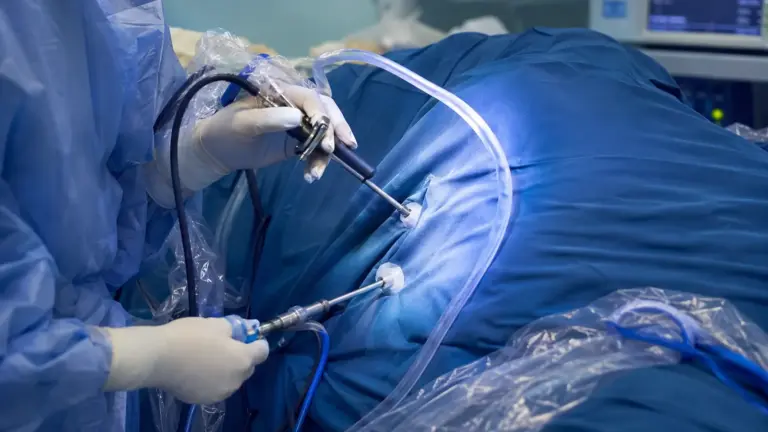
Spinal tumor surgery aims to relieve nerve compression, maintain spinal stability, and remove the tumor whenever possible. Depending on the tumor’s location and type, the procedure may be performed using open surgery or minimally invasive techniques. Bone cement injections (vertebroplasty, kyphoplasty) may be used to support a weakened spinal column.
Postoperative recovery varies depending on the method used, the type of tumor, and the patient’s neurological condition. Physical therapy and regular follow-up visits are an important part of the process, both for regaining function and monitoring for recurrence.
Frequently Asked Questions
Can a spinal tumor be felt by touch?
Since most spinal tumors are located deep within the body, they generally cannot be felt by touch. The tumor first manifests itself through symptoms such as pain, weakness, or numbness. The diagnosis is made using imaging methods such as MRI, not through a physical examination.
Is a spinal tumor dangerous?
Spinal tumors should be taken seriously because they can put pressure on the spinal cord and nerves. If left untreated, they can lead to loss of strength, paralysis, or problems with bladder and bowel control. However, with early diagnosis and appropriate treatment, it is possible to prevent these risks.
How long do people with spinal cancer live?
The prognosis varies from person to person depending on the type of tumor, whether it is primary or metastatic, the stage at diagnosis, and the response to treatment. In metastatic cases, the outcome depends largely on the status of the primary cancer. Therefore, it is not accurate to give a single timeframe; each patient is evaluated individually.
Can a spinal tumor be fatal?
Benign spinal tumors generally do not threaten life; the main concern is compression symptoms. In malignant and metastatic tumors, however, the course of the disease depends on the primary cancer and the treatment. Early diagnosis and multidisciplinary treatment positively impact both life expectancy and quality of life.
Conclusion
Spinal tumors are most often caused by the spread of another cancer to the spine and typically present with persistent back pain. Early diagnosis is of great importance due to the risk of spinal cord compression; symptoms such as weakness and changes in sensation should not be ignored. A multidisciplinary approach involving orthopedics, neurosurgery, and oncology is crucial for preserving both spinal stability and neurological function.
You can begin the examination process to assess your specific situation regarding a spinal tumor. Prof. Dr. Hasan Göçer evaluates each patient’s clinical presentation individually to determine the most appropriate treatment options.
Sources
- Cleveland Clinic, “Spinal Tumors: Types, Causes, Symptoms & Treatment,” 2026 — https://my.clevelandclinic.org/health/diseases/17500-spinal-tumors
- American Association of Neurological Surgeons (AANS), “Spinal Tumors”, 2024 — https://www.aans.org/patients/conditions-treatments/spinal-tumors/
- NCBI/PMC, “Current Concepts in the Management and Treatment of Spinal Metastases”, 2025 — https://www.ncbi.nlm.nih.gov/pmc/articles/PMC12025798/